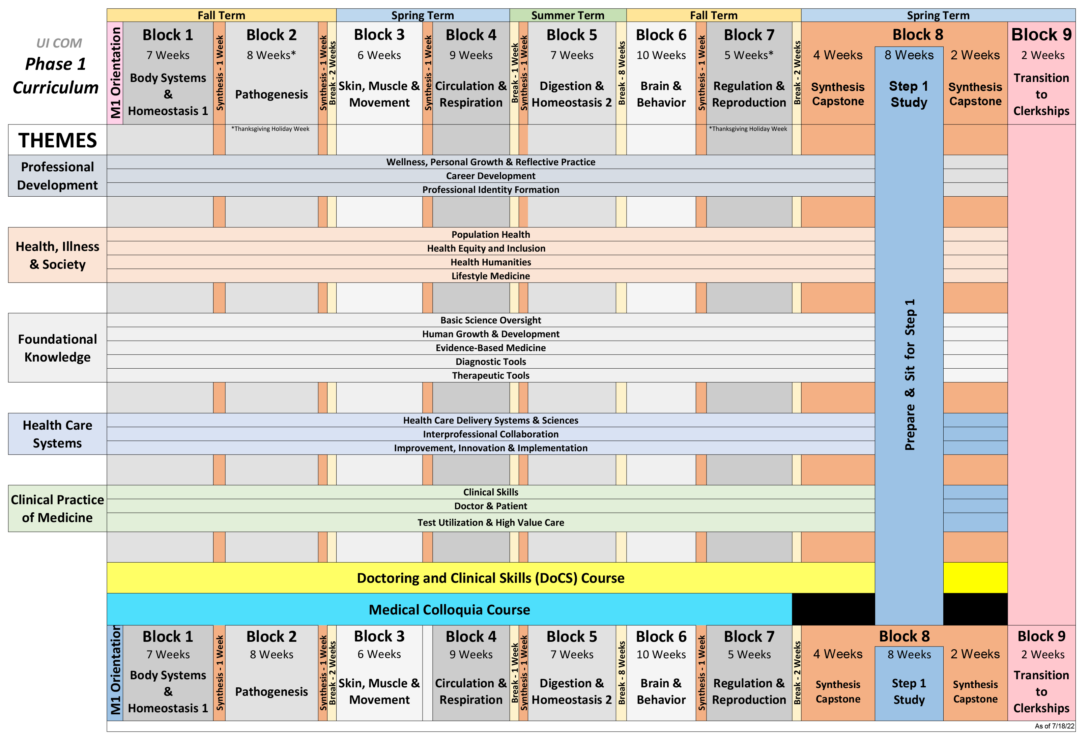
Phase 1 (Year 1 and Year 2) Curriculum
M1 & M2 Curriculum
Course Number: MDC 601, Credit Hours: 5
Block 1: Body Systems & Homeostasis 1 (7 Weeks) is the first introduction to the patient and healthcare system in the context of routine health maintenance and wellness. During this block, students will begin to learn about the roles and responsibilities of various members of the healthcare team. They will be introduced to the basics of the normal structure and function of the human body, including how to monitor health status using vital signs, general appearance, and laboratory tests. Students will learn the core concepts of the foundational sciences of medicine – genetics, biochemistry, immunology, microbiology, embryology, cell biology, physiology, pharmacology, evidence-based medicine – and how they relate to normal processes in the body. This core will provide the building blocks to distinguish abnormal from normal, and to understand the basis for diagnostic testing and pharmacologic interventions. They will also learn the basics of epidemiology and biostatistics to support effective clinical practice and interpretation of the scientific literature.
Doctoring and Clinical Skills (DoCS) and Medical Colloquia are also included in this block. Students will meet their first patients as a medical student, and they will practice the basics of communication and gathering history and vital signs during a patient encounter.
Students may feel overwhelmed by the large amount of material that needs to be read, digested, and integrated. That’s normal in medical school. There will be discussions on ways of maintaining personal and professional well-being, and help for developing strategies for coping with the stresses of life and school. Additionally, there will be an introduction to quality improvement processes that apply to personal and professional activities in order to become a reflective practitioner. All of the concepts introduced here will be revisited and built upon in subsequent block courses.
Course Number: MDC 602, Credit Hours: 6
Block 2: Pathogenesis (8 Weeks) is devoted to beginning a lifelong pursuit of understanding the etiology of disease formation and progression and the current ways to stabilize, mitigate, or even reverse the disease process using pharmacological, non-pharmacological, and complementary interventions. Students will learn about microbiology, immunology, and the tools to address infectious illness; and begin to study cancer, its origins, and its therapeutics. Alongside this, students will also learn ways to support their well-being, nurture their identity as a physician and a human, and connect with the community that they serve.
Course Number: MDC 603, Credit Hours: 5
Block 3: Skin, Muscle & Movement (6 weeks) begins in January following the winter break, and is the first of five block courses, extending for the calendar year through December of the M2 academic year, organized in an organ system approach. Students’ experience in the gross anatomy lab begins in this block and will extend through Block 7. This sequence is in part oriented toward the logistics of the approach to dissection (e.g., starting in this block with skin and muscular systems). The content will include study of skin, muscle and bone anatomy and physiology and include exploration of orthopedic and rheumatologic issues, physical disability, and issues in health care such as pain management and appropriate use of testing and surgical intervention in conditions such as back pain. The culmination of anatomy study is a meaningful Service of Gratitude for the gifts of the donors and their family during the M2 year.
Block 4:
Block 4: Circulation & Respiration (9 weeks) begins to explore fundamental physiologic and pharmacologic concepts in homeostasis, and introduces the student to some of the most common and significant health issues such as coronary disease, asthma and chronic lung disease. Many concepts in test utility, epidemiology, health systems, and health equity are also incorporated into this block.
Block 5: Digestion & Homeostasis 2
Block 5: Digestion & Homeostasis 2 (7 weeks) along with study of the GI and renal systems, begins to explore hormonal physiology, particularly the exocrine aspects related to GI function and endocrine issues such as diabetes and adrenal function. A number of health delivery systems and health equity issues surround the study of diabetes and of chronic kidney disease and dialysis. This block also provides many opportunities to return to the study of biochemistry and nutrition.
Block 6: Brain & Behavior
Block 6: Brain & Behavior (10 weeks) follows the summer break between the year 1 and year 2 academic years. Much of the peripheral nervous system would have been explored during previous blocks; here the emphasis is on the central nervous system, the special senses, and many aspects of normal and abnormal human development, psychology, and psychiatric disorders.
Block 7: Regulation & Reproduction
Block 7: Regulation & Reproduction (5 weeks) is the final organ system-oriented block course, and extends to the winter break of the M2 academic year. Students complete their initial study of anatomy with a focus on the pelvic floor and reproductive organs; an additional focus on endocrine function provides another opportunity to “spiral” to a deeper understanding of these complex physiologic interactions.
Block 8: Synthesis
Synthesis (Longitudinal) links the week-long intersessions between each block course, together with the longer, summative period of Block 8, to form a course focusing on the cumulative nature of students’ learning and the longitudinal trajectory of their professional development. In each of these course segments, students will have an interval where they are not continually responsible for “new” material but can reflect on their learning to date, consolidate and integrate their knowledge, and plan their approach to learning going forward. Class sessions will focus on cases that illustrate the interdependence of the organ systems studied to date and the management of complex, multi-system disease. The Professional Development Theme will be prominent in this course, with mentored small-group sessions addressing issues in professional identity formation, wellness and resilience, career discernment, and preparation for residency.
Block 9: Transition to Clerkship
The goal of the Transition to Clerkship (2 Weeks) course is to provide an overview of the clinical rotations, along with the knowledge, skills and attitudes required to be successful in the clinical clerkships and electives. This course also sets the stage for the longitudinal Phase 2/3 clinical connections and competencies (C3) course of the Illinois Medicine Curriculum.
Clinical clerkships and electives focuses on experiential learning where students are a part of the healthcare team providing patient care. Given the complexities of the healthcare systems, students will be expected to participate in various educational modules that provides an introduction to the various topics such as credentialing, patient safety, occupational exposure. Students will also have the opportunity as a part of the immersion experience, to observe the management of patients in an inpatient hospital settings. As a part of the immersion experience, the students will obtain a complete history and perform a physical exam in a hospitalized patient and receive feedback on their data gathering and clinical problem solving skills from upper classmen or residents. This opportunity will help ease the transition into the first clinical clerkship experience.
Program directors expect their incoming interns to be prepared to take of patients effectively and efficiently day 1 of residency. Entrustable Professional Activities (EPAs) is a framework that will be used to guide the development of skills and competencies of the learners and ensure that students are ready to perform certain functions without direct supervision on the first day of residency. Students will be introduced to these EPAs and also provided an overview of how they will continue to build their skills over the course of Phase 2 and 3.
Doctoring and Clinical Skills (DoCS)
Doctoring and Clinical Skills (Longitudinal) is the primary vehicle for the Clinical Practice theme and students’ introduction to the care of patients. The course will combine classroom exercises and discussion in small groups, skills practice with patient-instructors and with each other, clinical simulation-based exercises for instruction and assessment, in-hospital practice of the complete history and physical examination, and office-based primary care experience in working with patients.
Medical Colloquia
Medical Colloquia (Longitudinal) Given the extraordinary amount of curricular content addressed in the typical pre-clinical MD curriculum, and necessary to prepare students for Step 1 of the USMLE examination, course syllabi are usually limited to addressing these high priority issues and are very tightly scheduled and controlled. Yet issues related to medicine are a vital part of everyday news, and bear some relationship to nearly every other academic discipline at the university. The Medical Colloquia offer a varied menu of lectures, seminars, and brief presentations by faculty, students, and guest speakers from Chicago and around the world. The format can be used to augment other courses’ content with presentations on medically-related events in the news, introduce students to the perspectives of other health professions, and provide a venue for topics in the Health, Illness & Society, Health Care Systems, and Professional Development themes that do not fit easily into the schedules of other courses.
For campus specific information, please visit our campus sites:
Course Objectives
Course Objectives
- B1.1 Analyze the pathways associated with cellular energy metabolism and blood glucose regulation and explain how their disruption leads to disease symptoms.
- B1.2 Identify the characteristics of blood and describe how fluids, molecules, and ions move across cell membranes and body compartments to maintain homeostasis.
- B1.3 Relate the microanatomy and signaling of cells, tissues, and organs to function in epithelial tissue, connective tissue, blood, and lymphoid tissues and organs.
- B1.4 Utilize principles of genetic disease, including etiology and inheritance patterns, to assess patient risk and develop appropriate genetic testing strategies.
- B1.5 Describe the organization of the nervous system and how disruption of these systems can cause disease.
- B1.6 Formulate and prioritize a differential diagnosis based on patient presenting signs, symptoms, history, and diagnostic test results for diagnoses related to biochemistry and genetic conditions.
- B1.7 Develop a foundational understanding of pharmacodynamics, pharmacokinetics and therapeutic principles applied to the treatment of diseases presented within this course.
- B1.8 Develop a fundamental understanding of how to differentiate common microorganisms using structure, life cycle, transmission, and pathogenesis resulting in infectious disease.
- B1.9 Explain the major steps in leukocyte hematopoiesis as well as the mechanisms of antigen recognition in both the development of tolerized B and T lymphocytes and their activation following infection
- B1.10 Explain the innate and adaptive immune defenses to each of the major classes of infectious agents including the role of soluble mediators and major immune cell types in tissues and blood.
- B1.11 Apply principles of evidence-based medicine in order to ask patient-related care questions, gather evidence, appraise and apply literature findings.
- B1.12 Describe and evaluate the health care applications of artificial intelligence algorithms in the study of health conditions.
- B1.13 Identify biological, ethical, social, and psychological factors that influence the diagnosis and treatment of disease presented within the course.
- B1.14 Evaluate the impact of social, psychological, institutional, and systematic factors on health outcomes.
- B1.15 Recognize how health care systems treat diseases in a manner that is patient-centered and leverages interprofessional teams to achieve high quality, cost effective, and patient safety.
Course Number: MDC 602, Credit Hours: 6
- B2.1 Apply knowledge of foundational metabolic pathways to explain signs and symptoms of disease development and progression when those pathways are altered.
- B2.2 Explain how alteration of normal function of cells, organs, and body systems leads to signs and symptoms of disease.
- B2.3 Relate the microanatomy of cells, tissues, and organs to function in the hematolymphoid system.
- B2.4 Explain adaptive changes and mechanisms of disease including etiology, local or systemic responses, effects, pathogenesis, consequences, and molecular and cellular events.
- B2.5 Relate the mechanisms of disease, processes related to injury, and adaptive changes to the effects on the initial site, multi-organ systems, and the overall function of the person for diseases of the hematolymphoid system.
- B2.6 Formulate and prioritize a differential diagnosis based on presenting signs, symptoms, patient history, and diagnostic test results for infectious diseases, neoplasia and disorders of the blood.
- B2.7 Describe the different types of imaging modalities and how they are applied in patient care.
- B2.8 Demonstrate a foundational understanding of pharmacodynamics, pharmacokinetics and therapeutic principles applied to the treatment of diseases presented within this course.
- B2.9 Demonstrate a fundamental understanding of the mechanism of action, therapeutic uses, adverse effects, and contraindications of the drugs used to treat infections, blood disorders, and other diseases and disorders discussed in this course.
- B2.10 List the presenting infections, as well as the method of diagnosis and treatment, for each of the major acquired and congenital immunodeficiencies.
- B2.11 List the associated conditions/diseases and describe the underlying immune mechanism and medical treatment for each of the four hypersensitivity reactions.
- B2.12 Explain mechanisms of immune regulation and tolerance as well as immune reactions as they relate to blood transfusion, pregnancy, organ transplant, and bone marrow transplant.
- B2.13 Explain the fundamental principles of immunotherapy, including the mechanisms of action, clinical applications, and potential side effects of various immunotherapeutics.
- B2.14 “Apply principles of evidence-based medicine to health conditions including:
- a. asking foreground questions to address gaps in understanding related to patient care scenarios.
- b. acquiring evidence to answer questions related to patient care scenarios.
- c. appraising the literature to evaluate the validity of the evidence.
- d. applying the evidence to patient care scenarios considering the risks and benefits and making a recommendation regarding the use of the test or therapy.”
- B2.15 Identify biological, ethical, social, and psychological factors that influence diagnosis and treatment.
- B2.16 Evaluate the impact of social, psychological, institutional, and systematic factors on health outcomes.
- B2.17 Recognize how health care systems treat diseases in a manner that is patient-centered and leverages interprofessional teams to achieve high quality, cost-effective care and patient safety.
- B2.18 Recognize the risks, benefits, and costs of various interventions (specifically, radiologic and laboratory testing) in order to minimize those that are potentially non-beneficial or harmful and to incorporate patient values and preferences.
Course Number: MDC 603, Credit Hours: 5
- B3.1 Describe the normal development and anatomy of the skin and musculoskeletal system and how abnormal development and anatomical variation relate to diseases of the skin and musculoskeletal system.
- B3.2 Relate the microanatomy of cells, tissues, and organs to function in the skin and musculoskeletal system.
- B3.3 Relate normal skin and musculoskeletal function to the pathophysiologic consequences of disease states and explain how alteration of normal structure or function causes disease.
- B3.4 Apply knowledge of gross anatomical structures, neurovascular relationships, and mechanisms of injury to clinical contexts.
- B3.5 Interpret musculoskeletal radiographs, CTs, and MRIs, and correlate anatomical knowledge with physical exam findings.
- B3.6 Relate normal skin and musculoskeletal system function to the pathophysiologic consequences of disease states and explain how alteration of normal function leads to signs and symptoms of disease.
- B3.7 Relate the mechanisms of disease, processes related to injury, and adaptive changes to the effects on the initial site, multi-organ systems, and the overall function of the person for diseases of the skin and musculoskeletal system.
- B3.8 Formulate and prioritize a differential diagnosis based on presenting signs, symptoms, patient history, and diagnostic test results for skin and musculoskeletal system.
- B3.9 Demonstrate a foundational understanding of pharmacologic principles such as pharmacodynamics, pharmacokinetics, mechanisms of action, therapeutic uses, adverse effects, and contraindications of the drugs used to treat conditions of the skin and musculoskeletal system.
- B3.10 Recognize the most common presentation of each microorganism within the skin and musculoskeletal system, identify each organism and explain routes of infection and transmission.
- B3.11 Describe the role the immune system and immune modulating therapies (immunotherapy) play in autoimmune diseases and drug reaction of the skin and musculoskeletal systems.
- B3.12 Use evidence-based medicine to evaluate health conditions by finding relevant evidence, applying it to patient care while weighing risks and benefits, and making informed recommendations about tests or treatments.
- B3.13 Identify biological, ethical, social, and psychological factors that influence the diagnosis and treatment of the skin and musculoskeletal systems.
- B3.14 Evaluate the impact of social, psychological, institutional, and systematic factors on skin and musculoskeletal system health outcomes.
- B3.15 Recognize how health care systems treat diseases of the skin and musculoskeletal systems in a manner that is patient-centered and leverages interprofessional teams to achieve high quality, cost effective care, and patient safety.
Block 4:
- B4.1 Describe the normal development and anatomy of the cardiovascular and respiratory systems and how abnormal development and anatomical variations relate to cardiovascular and respiratory disease.
- B4.2 Relate the microanatomy of cells, tissues, and organs to their function in the cardiovascular and respiratory systems.
- B4.3 Relate normal cardiovascular and respiratory function to the pathophysiologic consequences of disease states and explain how alteration of normal structure or function causes disease.
- B4.4 Relate the mechanisms of disease, processes related to injury, and adaptive changes to the effects on the initial site, multi-organ systems, and the overall function of the person for diseases of the cardiovascular and respiratory systems.
- B4.5 Formulate and prioritize a differential diagnosis based on presenting signs, symptoms, patient history, and diagnostic test results for cardiovascular and respiratory diseases.
- B4.6 Interpret imaging modalities of the chest and correlate anatomical knowledge with physical exam findings.
- B4.7 Demonstrate a foundational understanding of pharmacologic principles such as pharmacodynamics, pharmacokinetics, mechanisms of action, therapeutic uses, adverse effects, and contraindications of the drugs used to treat cardiovascular and respiratory diseases.
- B4.8 Recognize the most common presentation of each microorganism within the cardiovascular and respiratory systems, identify each organism and explain routes of infection and transmission.
- B4.9 Describe the role the immune system and immune modulating therapies (immunotherapy) play in diseases of the cardiovascular and respiratory system.
- B4.10 Apply principles of evidence-based medicine to health conditions of the cardiovascular and respiratory system including: a. asking foreground questions to address gaps in understanding related to patient care scenarios. b. acquiring evidence to answer questions related to patient care scenarios. c. appraising the literature to evaluate the validity of the evidence. d. applying the evidence to patient care scenarios considering the risks and benefits
and making a recommendation regarding the use of the test or therapy. - B4.11 Appraise studies of artificial intelligence algorithms to determine if they can be applied to patient care scenarios.
- B4.12 Identify biological, ethical, social, and psychological factors that influence the diagnosis and treatment of cardiovascular and respiratory diseases.
- B4.13 Evaluate the impact of social, psychological, institutional, systematic, and planetary health-related factors on cardiovascular and respiratory health outcomes.
- B4.14 Recognize how health care systems treat diseases of the cardiovascular and respiratory systems in a manner that is patient-centered and leverages interprofessional teams to achieve high quality, cost effective care, and patient safety.
Block 5: Digestion & Homeostasis 2
- B5.1 Describe the normal development and anatomy of the gastrointestinal and renal systems and how abnormal development and anatomical variation relate to gastrointestinal and renal diseases.
- B5.2 Relate the microanatomy of cells, tissues, and organs to their function in the gastrointestinal and renal systems.
- B5.3 Relate normal gastrointestinal and renal function to the pathophysiologic consequences of disease states and explain how alteration of normal structure or function causes disease.
- B5.4 Interpret imaging modalities of the gastrointestinal and renal systems and correlate anatomical knowledge with physical exam findings.
- B5.5 Relate the mechanisms of disease, processes related to injury, and adaptive changes to the effects on the initial site, multi-organ systems, and the overall function of the person for diseases of the gastrointestinal and renal systems.
- B5.6 Formulate and prioritize a differential diagnosis based on presenting signs, symptoms, patient history, and diagnostic test results for gastrointestinal and renal diseases.
- B5.7 Demonstrate a foundational understanding of pharmacologic principles such as pharmacodynamics, pharmacokinetics, mechanisms of action, therapeutic uses, adverse effects, and contraindications of the drugs used to treat gastrointestinal and renal diseases.
- B5.8 Recognize the most common presentation of each disease-causing microorganism within the gastrointestinal and renal systems, identify each organism, and explain routes of infection and transmission.
- B5.9 Describe the role the immune system and immune modulating therapies (immunotherapy) play in diseases of the gastrointestinal and renal systems.
- B5.10 Apply principles of evidence-based medicine to health conditions of the gastrointestinal and renal system including: a. asking foreground questions to address gaps in understanding related to patient care scenarios. b. acquiring evidence to answer questions related to patient care scenarios. c. appraising the literature to evaluate the validity of the evidence. d. applying the evidence to patient care scenarios considering the risks and benefits and making a recommendation regarding the use of the test or therapy.
- B5.11 Appraise use of artificial intelligence algorithms in healthcare research.
- B5.12 Identify biological, ethical, social, and psychological factors that influence the diagnosis and treatment of gastrointestinal and renal diseases.
- B5.13 Evaluate the impact of social, psychological, institutional, and systematic factors on gastrointestinal and renal health outcomes.
- BL5 14 Recognize how health care systems treat diseases of the gastrointestinal and renal systems in a manner that is patient-centered and leverages interprofessional teams to achieve high quality, cost effectiveness, and patient safety.
- BL5 15 Recognize the basic scientific, and ethical principles, methods for conducting clinical and translational research.
Block 6: Brain & Behavior
- B6.1 Describe the normal embryologic development and anatomy of the head, neck, brain, and spinal cord.
- B6.2 Demonstrate knowledge of the physiology and biochemistry of the different structural areas (e.g. lobes of brain, cranial nerves, etc.) of the brain and spinal cord which maintain normal function.
- B6.3 Recognize common clinical presentations, diagnoses, and treatments of conditions of the special senses (eye and visual pathways, auditory, and vestibular pathways).
- B6.4 Relate the microanatomy of cells, tissues, and organs to their function in the nervous system.
- B6.5 Relate normal brain development, structure and function to the pathophysiologic consequences of disease states and explain how alteration of normal structure or function leads to signs and symptoms of disease.
- B6.6 Interpret imaging modalities of the head, neck, and spinal cord correlating anatomical knowledge with physical exam findings.
- B6.7 Describe the biopsychosocial model and how it relates to the assessment and diagnosis of psychiatric conditions.
- B6.8 Identify the genetic, biological, environmental, and personality factors which contribute to the onset of psychiatric disorders.
- B6.9 Describe the typical psychological development throughout the lifespan.
- B6.10 Relate the mechanisms of disease; processes for causing, sustaining, extending, or resolving injury; and adaptive changes to the effects on the initial site, multi-organ systems, and the overall function of the person for diseases of the head and neck region, eye, and nervous system.
- B6.11 Formulate and prioritize a differential diagnosis based on presenting signs, symptoms, patient history, and diagnostic test results for neurologic and psychiatric disorders.
- B6.12 Demonstrate a foundational understanding of pharmacologic principles such as pharmacodynamics, pharmacokinetics, mechanisms of action, therapeutic uses, adverse effects, and contraindications of the drugs relevant to treatment of neurologic disorders and psychiatric disorders.
- B6.13 Recognize the most common presentation of each microorganism within the central nervous system, identify each organism, and explain routes of infection and transmission.
- B6.14 Describe the role of the immune system in neurologic disease and the role of immune modulating therapies in treatment.
- B6.15 Outline key milestones and changes from infancy to old age and discuss developmental disorders.
- B6.16 Discuss non-pharmacologic approaches to the treatment of psychiatric disorders.
- B6.17 Apply principles of evidence-based medicine to health conditions including: a. asking foreground questions to address gaps in understanding related to patient care scenarios. b. acquiring evidence to answer questions related to patient care scenarios. c. appraising the literature to evaluate the validity of the evidence. d. applying the evidence to patient care scenarios considering the risks and benefits and making a recommendation regarding the use of the test or therapy.
- B6.18 Evaluate appropriate use of AI-generated recommendations in the care of patients with psychiatric conditions.
- B6.19 Identify biological, ethical, social, and psychological factors that influence the diagnosis and treatment of neurologic and psychiatric disorders.
- B6.20 Evaluate the impact of social, psychological, institutional, and systematic factors on neurologic and psychiatric disorders.
- B6.21 Recognize how health care systems treat neurologic and psychiatric disorders with compassionate, patient-centered care and leverages interprofessional teams to achieve high quality and cost-effective treatments, and patient safety.
Block 7: Regulation & Reproduction
- B7.1 Describe the normal anatomy of the endocrine and reproductive systems and how abnormal anatomy and anatomical variation relate to diseases of the endocrine and reproductive systems.
- B7.2 Relate normal prenatal and neonatal developmental processes to normal postnatal structure and function, how abnormal processes lead to malformations, and clinical findings related to normal and abnormal development in the endocrine and reproductive systems.
- B7.3 Relate the microanatomy of cells, tissues, and organs to function in the endocrine, female reproductive, and male reproductive systems.
- B7.4 Relate normal reproductive and endocrine system function to the pathophysiologic consequences of disease states and explain how alteration of normal structure or function causes disease.
- B7.5 Relate the mechanisms of disease, processes related to injury, and adaptive changes to the effects on the initial site, multi-organ systems, and the overall function of the person for diseases of the reproductive and endocrine systems.
- B7.6 Interpret imaging techniques of the breast, and structures of the reproductive and endocrine systems, correlating anatomical knowledge with physical exam findings.
- B7.7 Formulate and prioritize a differential diagnosis based on presenting signs, symptoms, patient history, and diagnostic test results for endocrine and reproductive diseases.
- B7.8 Demonstrate a foundational understanding of pharmacologic principles such as pharmacodynamics, pharmacokinetics, mechanisms of action, therapeutic uses, adverse effects, and contraindications of the drugs used to treat reproductive and endocrine diseases.
- B7.9 Recognize the most common presentation of each disease-causing microorganism within the reproductive system, identify each organism and explain routes of infection and transmission.
- B7.10 Relate key developmental milestones and changes from infancy to old age to developmental disorders of the endocrine and reproductive systems.
- B7.11 Apply principles of evidence-based medicine to health conditions including: a. asking foreground questions to address gaps in understanding related to patient
care scenarios. b. acquiring evidence to answer questions related to patient care scenarios. c. appraising the literature to evaluate the validity of the evidence. d. applying the evidence to patient care scenarios considering the risks and benefits and making a recommendation regarding the use of the test or therapy. - B7.12 Describe and evaluate the health care applications of artificial intelligence algorithms in the study of health conditions with a focus on: a. appraisal of the validity and relevance of studies on the AI application. b. assessing the impact of the AI application on justice, equity, and ethics. c. assessing the ability of the AI application to integrate diverse sources of information in creating patient-centered care plans. d. assessing the impact of AI application implementation on teams, roles, responsibilities, and workflows. e. assessing how AI applications can impact participation in practice-based improvement activities.
- B7.13 Identify ethical, social, psychological, institutional, and systemic factors that influence the diagnosis and treatment of endocrine and reproductive system diseases.
- B7.14 Evaluate the impact of social, psychological, institutional, and systematic factors on endocrine and reproductive system health outcomes.
- B7.15 Recognize how health care systems treat diseases of the endocrine and reproductive systems in a manner that is patient-centered and leverages interprofessional teams to achieve high quality, cost effective care, and patient safety.
Block 8: Synthesis
- Synthesis 1 Gather a complete history of present illness for a patient as a team
- Synthesis 2 Demonstrate effective communication and listening skills with patients and colleagues
- Synthesis 3 Integrate principles of biochemistry, pharmacology, pathology, and physiology learned in preceding blocks and apply this knowledge to patient cases and multi-organ disease processes
- Synthesis 4 Evaluate the impact of social, psychological and institutional factors that influence the care and experience of communities and of patients with varying diseases
- Synthesis 5 Develop individualized learning plans and skills to identify gaps in knowledge based on analysis of prior performance
- Synthesis 6 Discuss strategies of how to give effective feedback and apply this when providing peer feedback to colleagues
- Synthesis 7 Develop skills to sustain personal and professional growth in the domains of wellness, identity formation, and self-reflection.
- Synthesis 8 Identify resources and build tools to guide career exploration and specialty choice.
- Synthesis 9 Describe healthcare systems and delivery models and identify how these models impact physicians, patients, and communities.
Block 9: Transition to Clerkship
- TTC1 Develop strategies to maximize clinical skill, career, and professional development during clerkships
- TTC2 Understand policies and procedures that impact the learning environment in the clinical setting, including the process for reporting events in the learning environment
- TTC3 Discuss the key principles of learner assessment and evaluation in clinical settings
- TTC4 Demonstrate the technical skills required for common procedures performed by many clinicians, including arterial blood gas (ABG), blood glucose and diabetes injectables, donning and doffing personal protective equipment (PPE), injections (intramuscular and subcutaneous), insertion and removal of IV catheter, metered dose inhaler (MDI) and peak flow meter (PF), nasogastric (NG) tube insertion, phlebotomy, escalation of airway support, EKG lead placement, timeout, and sterile technique.
- TTC5 Understand the clinical skills required for each clerkship, such as formulating a differential diagnosis, assessment and plan, documenting in the medical record, writing a progress (SOAP) note, and communicating with team members about patients, such as on rounds.
- TTC6 Develop an approach to self-care, caring for peers, and patients’ families after experiencing the death of a patient in a simulated environment.
- TTC7 Discuss student expectations in the clinical space and how their interactions with patients, faculty, and residents shape their professional identity formation
- TTC8 Complete the credentialing and compliance processes required to participate in clinical rotations at the primary clinical site, including hospital badge and identification and access to the electronic health record (EHR)
- TTC9 Demonstrate understanding of the electronic documentation required to meet regulations and professional expectations in patient care through use of the electronic health record (EHR)
- TTC10 Discuss the importance of reporting patient safety concerns at clinical sites to enhance patient care
- TTC11 Describe the importance of supporting one’s own health and well-being during the clinical years
- TTC12 Understand the importance of patient-centered and linguistically concordant care
- TTC13 Develop strategies to mitigate bias and limit the use of stigmatizing language in patient care
- TTC14 Describe the elements of electronic and written prescriptions, including how to limit medication errors
- TTC15 Develop the skills to collaborate with interprofessional team members in patient care
- TTC16 Describe the risks involved in occupational exposures for health care personnel (HCP)
- TTC17 Explore differences in personal and professional use of social media
Doctoring and Clinical Skills (DoCS)
- DoCS 1 Elicit a complete and focused medical history with all essential elements included
- DoCS 2 Develop comfort and skill in systematic interviewing of patients with varying medical and psychosocial conditions.
- DoCS 3 Understand the importance of and demonstrate effective communication and listening skills with patients, families and colleagues
- DoCS 4 Demonstrate patient-centered examination techniques that reflect respect for patient privacy, comfort, and safety.
- DoCS 5 Perform a complete and accurate physical exam in a logical and fluid sequence.
- DoCS 6 Perform a clinically relevant, focused physical exam pertinent to the purpose of the patient visit.
- DoCS 7 Identify, describe and document abnormal physical exam findings
- DoCS 8 Obtain pertinent history and perform physical exam elements based on their appropriateness to the patient.
- DoCS 9 Formulate comprehensive problem lists and differential diagnoses.
- DoCS 10 Document and present pertinent clinical assessments and care plans concerning patients in a clear, succinct and well-organized fashion.
- DoCS 11 Search out, recognize, organize and effectively utilize key information based on knowledge of medical problems and experience.
- DoCS 12 Demonstrate ability to build rapport with patients by utilizing effective questioning and listening skills
- DoCS 13 Demonstrate appropriate professional behavior, including:
- Respect: Treats all with respect
- Truthfulness: Appropriately balances truth and tact
- Conscientiousness/Preparation: Thorough, committed and dependable in completing assigned tasks
- Discernment: Awareness of the limits of their knowledge/skills/attitudes
- Participation: Actively involved in learning
- DoCS 14 Approach medicine, patients and colleagues with integrity, honesty, caring, empathy and respect for human dignity.
- DoCS 15 Gain an understanding and appreciation of the impact patients’ illnesses have on their lives and the lives of their families.
- DoCS 16 Remain nonjudgmental and understand how personal biases may affect the care and treatment of patients.
- DoCS 17 Understand basic patients’ rights and aspects of confidentiality.
Medical Colloquia
- Medical Colloquia 1 Apply knowledge from the foundational science, clinical practice, health care systems, health, illness and society, and professional development themes to describe the perspectives of patients and community members regarding health care and medical practice. (Medical Knowledge)
- Medical Colloquia 2 Analyze in real-time late-breaking issues in the public health and scientific realms and explain their present and future impact on healthcare. (Medical Knowledge)
- Medical Colloquia 3 Identify and discuss the importance of interprofessional and community relationships through the integration of external groups in programming and delivery of the Medical Colloquia Course. (Interprofessional Collaboration)
- Medical Colloquia 4 Demonstrate self-directed learning by:
- Identifying learning needs from Colloquia they have attended
- critically analyzing and synthesizing medical literature to answer their questions
- appraising the credibility of the literature, and
- attending to faculty feedback on this process. (Practice-Based Learning and Improvement)
View Educational Policies
College-Wide Block Leaders
| Course | Block Leader(s) |
|---|---|
| Block 1 | Hugh Clements-Jewery, PhD |
| Block 2 | Paul Chastain, PhD and Mahesh Patel, MD |
| Block 3 | Emily Klopp, PhD |
| Block 4 | Anamika Sengupta, PhD, M.Ed and Pat Belvitch, MD |
| Block 5 | Jenna Regan, PhD |
| Block 6 | Tracy Soltesz, PhD |
| Block 7 | Robert Joseph Hillwig, MD |
| Block 8 | Gina Choi, MD |
| Block 9: Transition to Clerkships (TTC) | Michelle Barnes, MD |
| Doctoring and Clinical Skills (DoCS) | Joshua Thompson, MD |
| Medical Colloquia | Christina Wells, MD |